
Hybrid Heat Pump & Solar PV Integration: Bespoke Solutions for Southampton and Hampshire Businesses
Did you know that heat pumps have already captured 50% of the national space heating market in Germany, a milestone reached for the first time in recent trading? That kind of shift shows exactly why Hybrid Heat Pump & Solar PV Integration has become such a hot topic for commercial and industrial premises across Hampshire, and it’s a subject we get asked about on almost every site survey we carry out.
Key Takeaways
| Question | Quick Answer |
|---|---|
| What is Hybrid Heat Pump & Solar PV Integration? | Combining a heat pump with rooftop or ground-mounted solar PV panels so the pump draws on free daytime solar generation rather than pulling everything from the grid. |
| Does it work for commercial premises as well as homes? | Yes, we design bespoke cooling and heating installations for the commercial and industrial marketplace, and solar integration slots into most of these projects. |
| How much heat output do I get per KW of electricity? | As a rule of thumb, for every KW of electricity fed in during heating mode, a heat pump will output 2-3 KW because of its dual capability. |
| Which heat pump brand do you specialise in? | We are Approved Service Technicians for Calorex Heat Pumps and can respond directly to breakdown calls. |
| Can existing air conditioning units be part of the hybrid setup? | Modern air conditioning units do heating as well, so many of our clients already own half the equipment they need without realising it. |
| Is a design consultation available before committing? | Yes, our heat pump design team will find the right system for whatever your needs, project large or small. |
| Are grants or subsidies available? | Installation subsidy programmes in various regions cover between 30% and 75% of purchase and installation costs, so it’s always worth asking before you sign anything. |
What Does Hybrid Heat Pump & Solar PV Integration Actually Mean?
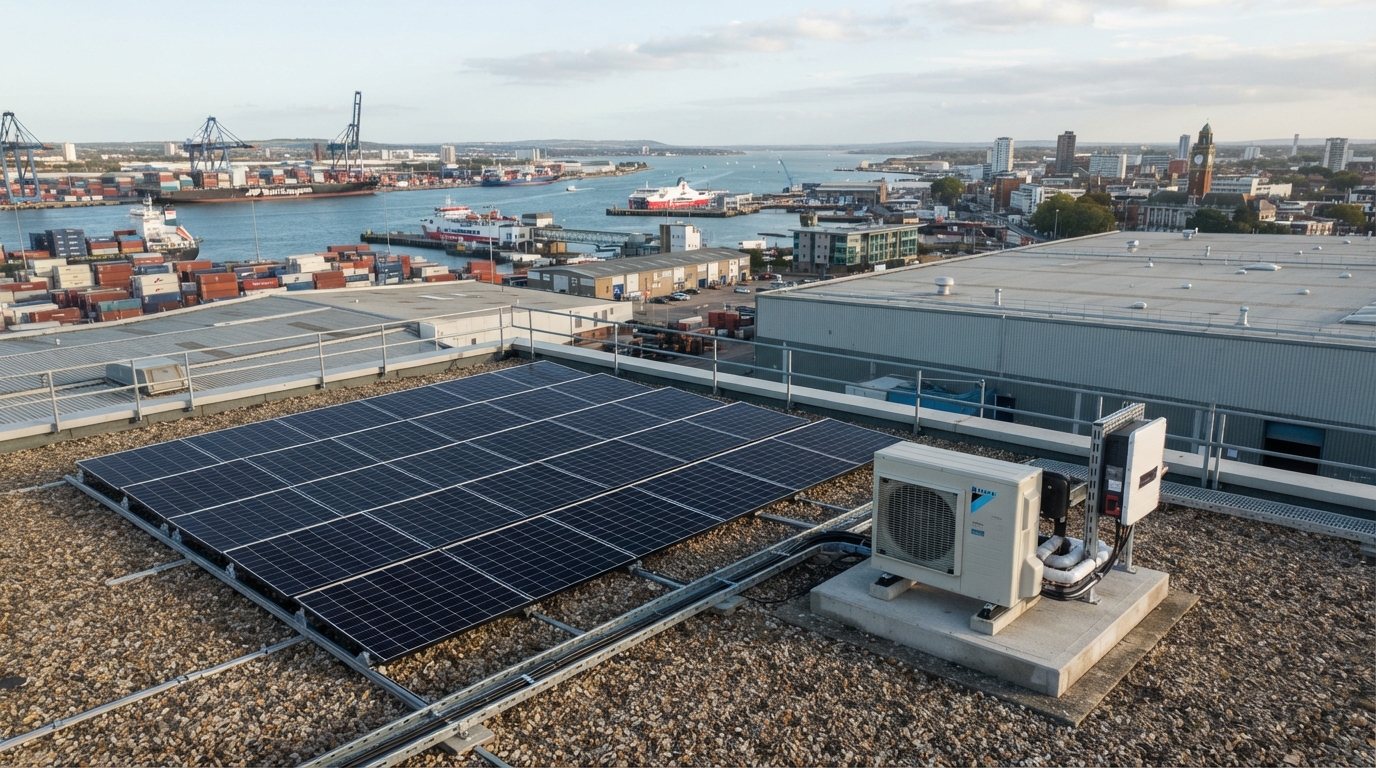
In plain terms, Hybrid Heat Pump & Solar PV Integration means pairing a heat pump, which uses electricity to move heat rather than generate it directly, with solar photovoltaic panels that generate that electricity on-site.
The heat pump can then draw on free solar power during daylight hours instead of pulling everything from the grid, and any surplus generation can be stored or exported depending on your system design.
Of course modern air conditioning units do heating as well! Many of the commercial systems we install already have this dual capability built in, which makes them a natural partner for solar generation rather than a separate piece of kit entirely.
Why Hybrid Heat Pump & Solar PV Integration Makes Sense for Hampshire Businesses
With summers becoming warmer and employees becoming less tolerant of uncomfortable working conditions, now may be the time to increase your office workforce productivity by investing in comfort cooling that also handles your winter heating load.
Running that same system on solar-generated electricity, at least for the hours the sun is shining, reduces the running cost side of the equation considerably.
- Lower daytime running costs: Offices and warehouses tend to draw heat and cooling load during working hours, which lines up neatly with solar generation.
- Reduced carbon footprint: Combining renewable generation with a renewable heat source is about as clean as commercial climate control gets.
- Protection from rising energy prices: The less grid electricity you rely on, the less exposed you are to price volatility.
How the Numbers Stack Up: Rule of Thumb Efficiency
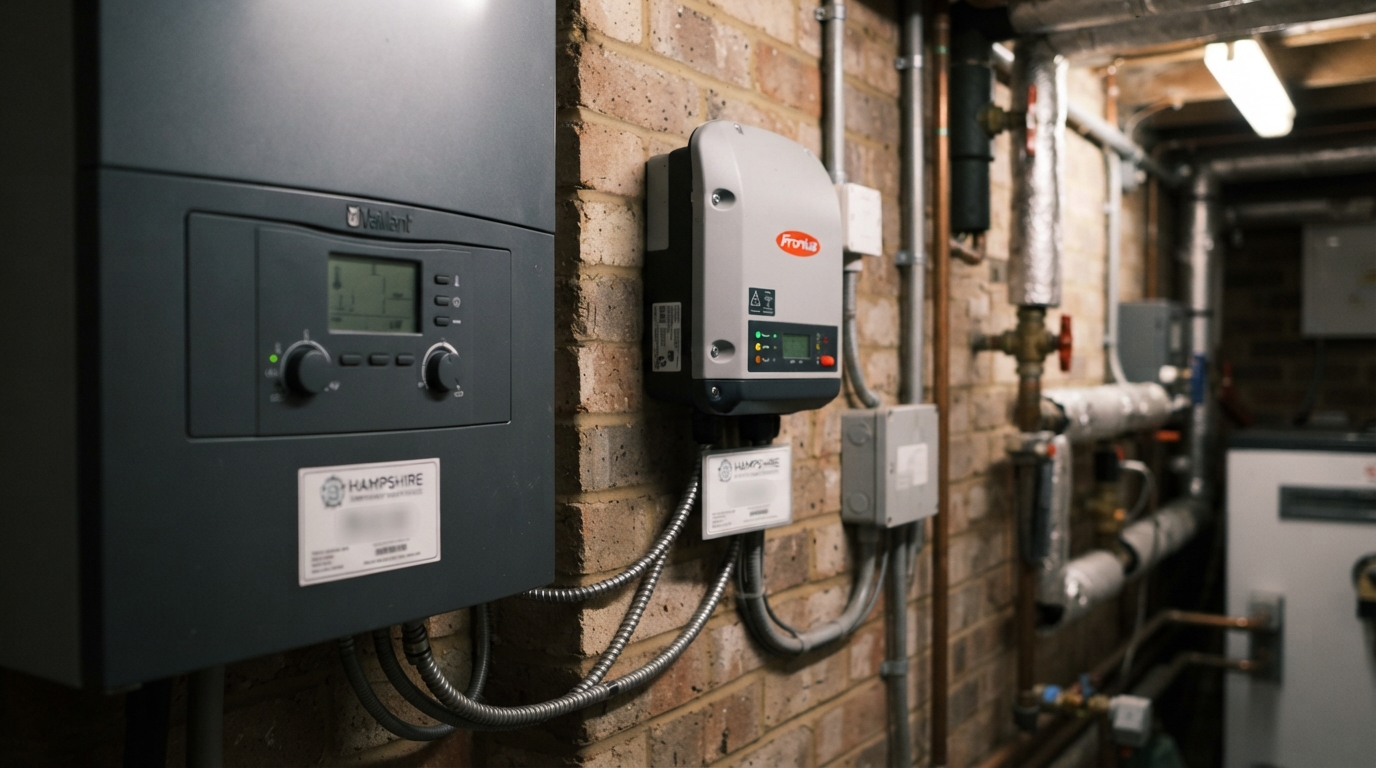
As a rule of thumb, for every KW of electricity that you feed in when in heating mode, a heat pump will output 2-3 KW because of its dual capability of being a heat pump rather than a simple resistive heater.
With DC inverter compressors now available on most models, combining cutting edge technology with exceptional performance, speedy and powerful cooling and heating is achieved with minimum power consumption. Add solar generation into that equation and the electricity you are feeding in during daylight hours can effectively be free.
Did You Know?
Solar PV module prices fall by an average of 26.7% for every doubling of cumulative production, making Hybrid Heat Pump & Solar PV Integration increasingly cost-effective for commercial sites.
Source: Fraunhofer ISE
Calorex Heat Pumps: Our Approved Service Technician Status
We are Approved Service Technicians for Calorex Heat Pumps Ltd, which means consumers who own any model of Calorex heat pump or dehumidifier and require repair work or maintenance may come directly to us, and can expect a speedy and reliable service.
This matters when you’re planning a hybrid installation because it isn’t just about the initial fit. Ongoing servicing keeps the whole system, heat pump and solar generation working together, running at peak efficiency for years to come.
Our mission is to provide bespoke cooling and heating installations, servicing and maintenance for the commercial and industrial marketplace and to exceed customer expectations.
Real Project Experience: Combining Renewables With Specialist Cooling
We’ve applied this same thinking to unusual projects beyond standard office heating and cooling. We designed and installed a controlled temperature insulated room for the storage of bottled wine, grown on vineyards at MJI Exton, which shows the range of climate control solutions our design department can turn its hand to.
Projects like this demonstrate that Hybrid Heat Pump & Solar PV Integration isn’t limited to simple space heating. Cold storage, refrigeration, and precision temperature rooms can all benefit from the same renewable-led approach, and our commercial refrigeration team works alongside our heat pump specialists on exactly this kind of bespoke brief.
Comfort Cooling and Heating in the Same System
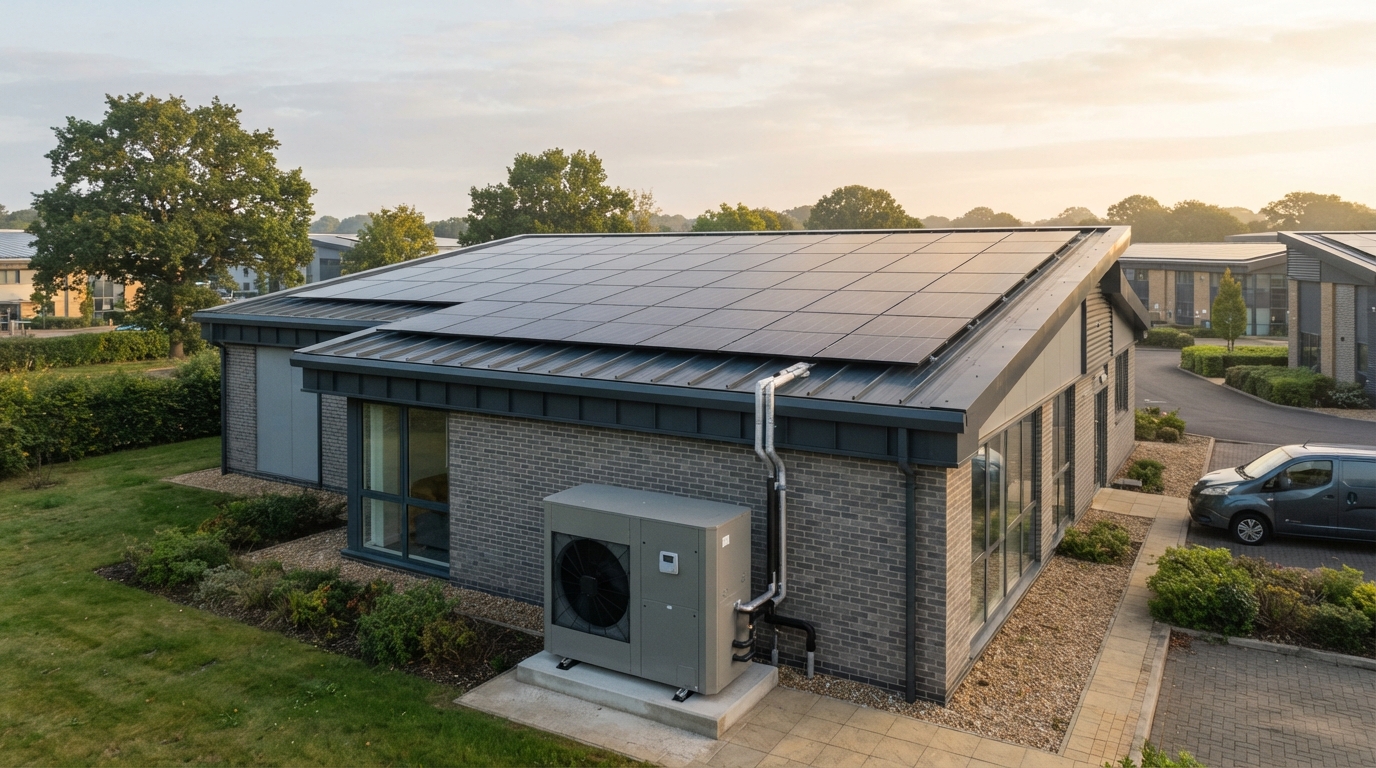
One of the questions we get asked most often on site visits is whether a single unit can really do both jobs well. The answer is yes, and it’s one of the reasons hybrid setups have become so popular in the commercial air conditioning world over the past few years.
A DC inverter compressor unit switches between cooling and heating mode automatically depending on the season, which means you’re not paying for two separate systems, and you’re not paying twice for installation and commissioning either.
Maintenance: The Part Most People Forget
Helping our customers minimise their energy use by providing advice on regular maintenance schedules and selection of energy efficient products is a core part of what we do, and it becomes even more important once solar generation is added to the mix.
A poorly maintained heat pump loses efficiency gradually, often without anyone noticing until the energy bill arrives. Our planned preventative maintenance contracts are designed to catch that drift before it becomes expensive.
Did You Know?
Norway leads European adoption density with 650 heat pumps installed for every 1,000 households, a figure that shows just how mainstream this technology has become.
Source: European Heat Association (EHPA)
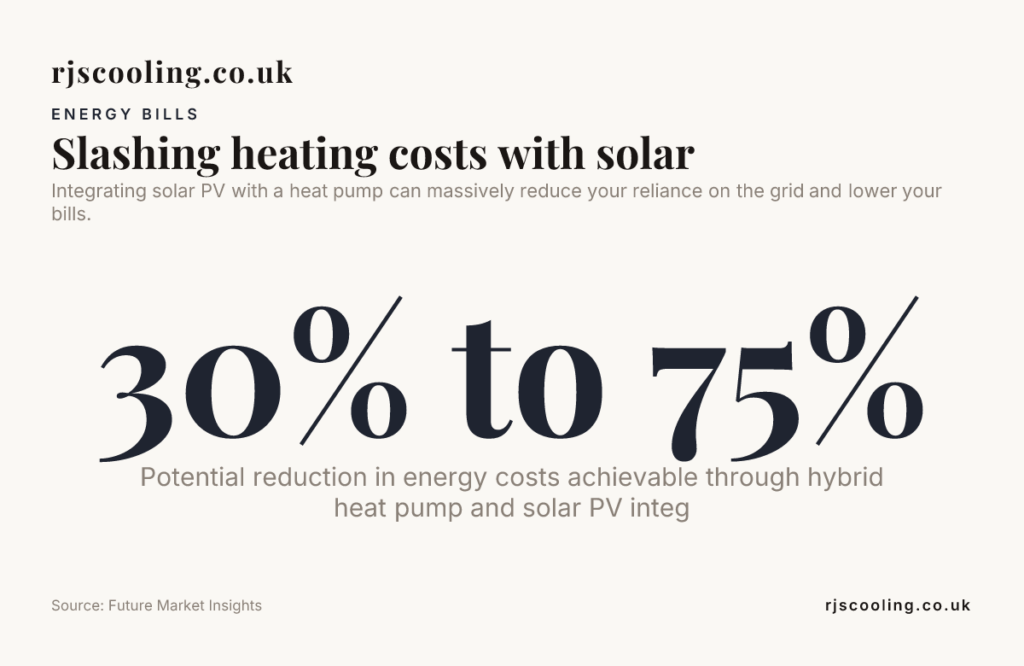
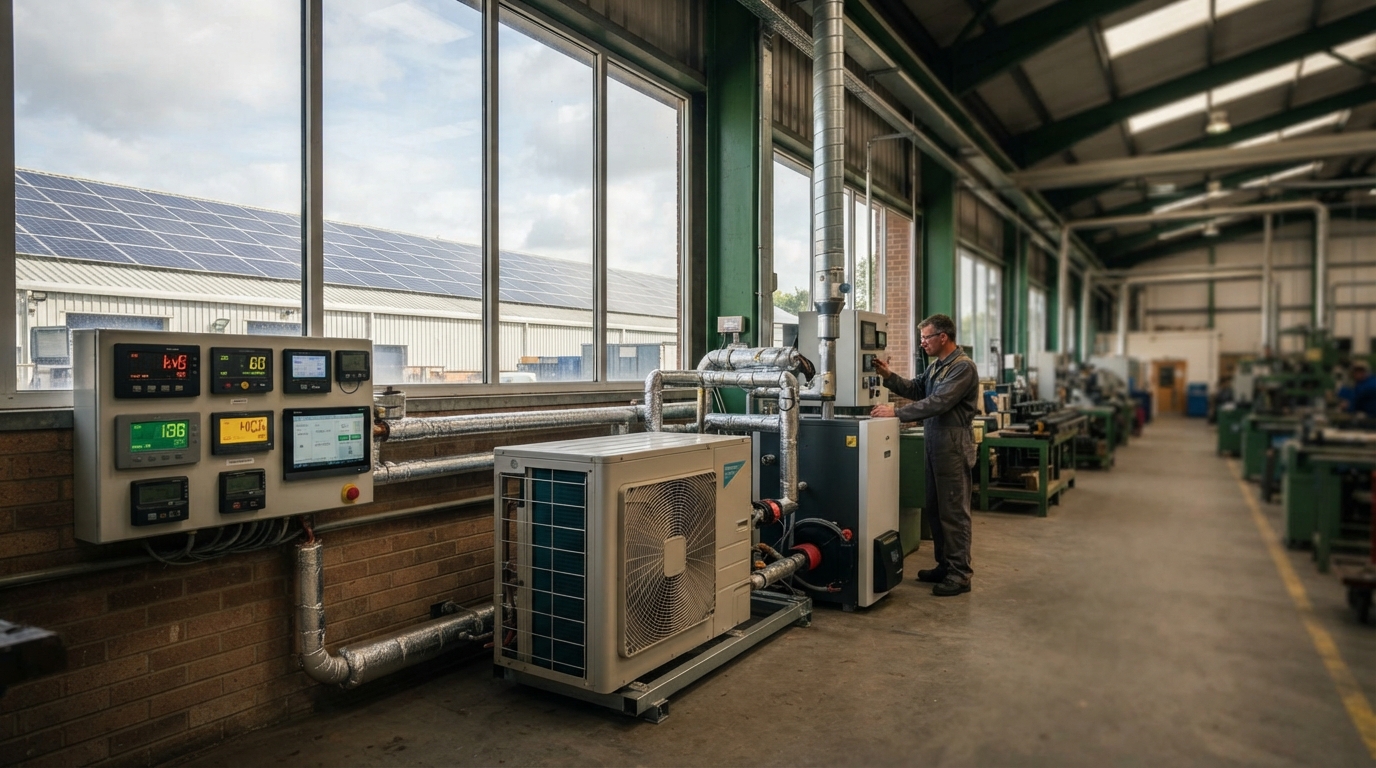
Integrating solar PV with a heat pump can massively reduce your reliance on the grid and lower your bills.
Choosing the Right Hybrid Heat Pump & Solar PV Integration System
No two sites are the same, which is exactly why we lean on our design department to work out the right system for whatever your needs, whether that’s a small office suite or a large industrial unit.
Roof orientation, available roof space, existing electrical infrastructure, and current heating and cooling demand all feed into the final specification. You can browse examples of the kind of equipment involved on our products page, which covers air conditioning, heat pumps and refrigeration ranges we work with regularly.
Our reputation for leading in quality and innovation has grown through a commitment to constant improvement, ensuring customers receive the very best ventilation and heating products available on the market today.
Frequently Asked Questions
Is Hybrid Heat Pump & Solar PV Integration worth it for a small commercial unit?
Yes, even smaller commercial units benefit from Hybrid Heat Pump & Solar PV Integration because daytime energy demand for heating, cooling and lighting tends to align well with solar generation hours. The payback period depends on roof space and current energy usage, which is why a site survey is always the sensible first step.
How long does a hybrid heat pump and solar PV system last?
A well-maintained heat pump typically lasts 15-20 years, and solar panels are commonly rated for 25 years or more of usable output. Regular servicing through a maintenance contract makes a significant difference to how long a Hybrid Heat Pump & Solar PV Integration system keeps performing at its rated efficiency.
Can I add solar panels to an existing heat pump system?
In most cases, yes. Retrofitting solar PV onto an existing heat pump installation is one of the more common enquiries we receive, and our design team can assess whether your current setup and roof space support Hybrid Heat Pump & Solar PV Integration without a full system replacement.
Do heat pumps still work without solar power at night or in winter?
Absolutely, a heat pump will simply draw from the grid when solar generation isn’t available, so you never lose heating or cooling capability. The solar element of Hybrid Heat Pump & Solar PV Integration is there to reduce running costs, not to act as the sole power source.
What’s the difference between air source and ground source for hybrid integration?
Air source heat pumps remain the dominant choice for residential and light commercial installations, accounting for the majority of the market, mainly because they’re simpler and cheaper to install than ground source systems. Ground source can offer better efficiency in some settings but requires more space and a larger upfront investment, which is worth discussing during your consultation.
Are there grants available to help with the cost of installation?
Installation subsidy programmes in various regions can cover between 30% and 75% of the total purchase and installation costs for heat pumps, though eligibility depends on your location and property type. It’s always worth asking us directly during your consultation, as we can point you toward the current schemes relevant to Hampshire businesses.
Will a hybrid system actually lower my energy bills?
Yes, in most cases. Because a heat pump can output 2-3 KW of heat for every 1 KW of electricity fed in, and solar PV reduces how much of that electricity comes from the grid, Hybrid Heat Pump & Solar PV Integration typically delivers a noticeable drop in running costs compared with fossil fuel boilers or standalone electric heating.
Not a Passing Trend
Hybrid Heat Pump & Solar PV Integration isn’t a passing trend, it’s becoming the standard way forward for commercial and industrial premises that want lower running costs without sacrificing comfort. We have been established in Hampshire for over 25 years and pride ourselves on our quality of service, and that experience means we can guide you through a project large or small, from the first design conversation right through to ongoing maintenance.
If you’d like to talk through what a Hybrid Heat Pump & Solar PV Integration project could look like for your site, get in touch with our team for a consultation and site survey.
Related Posts
R290 vs R32: Which Natural Refrigerant Maximises Energy Savings?
R290 vs R32: Which Natural Refrigerant Maximises Energy Savings? Did…
How Air Source Heat Pumps Work
How Air Source Heat Pumps Work: A Straightforward Guide for…
Air Source Heat Pumps v Traditional Heating
Air Source Heat Pumps v Traditional Heating: Which One Actually…