
How Air Source Heat Pumps Work: A Straightforward Guide for Hampshire Homes and Businesses
Understanding how air source heat pumps work starts with one simple fact: they don’t burn fuel to create heat, they move it. A heat pump water heater produces just 519 kilograms of carbon dioxide equivalent each year, compared to a staggering 1,433 kilograms from a traditional gas tank heater, and that gap is exactly why so many businesses across Southampton and Hampshire are asking us to explain the technology properly before they commit.
Key Takeaways
- Heat pumps move heat, they don’t generate it – refrigerant absorbs warmth from outside air even on cold days.
- Efficiency is the whole point – as a rule of thumb, for every KW of electricity you feed in, a modern unit can output 2-3 KW of heat.
- DC inverter compressors allow the system to modulate output, so you’re not paying for full power when it isn’t needed.
- Commercial systems scale up to serve schools, hospitals and industrial units, not just single offices.
- Regular maintenance protects both your investment and your energy bills over the lifespan of the unit.
- Design matters – the right system depends entirely on your building type and heating demand, which is why a proper design process comes first.
- Explore our full range of heat pump services to see what’s involved from design through to installation.
What Is an Air Source Heat Pump and Why Does It Matter?
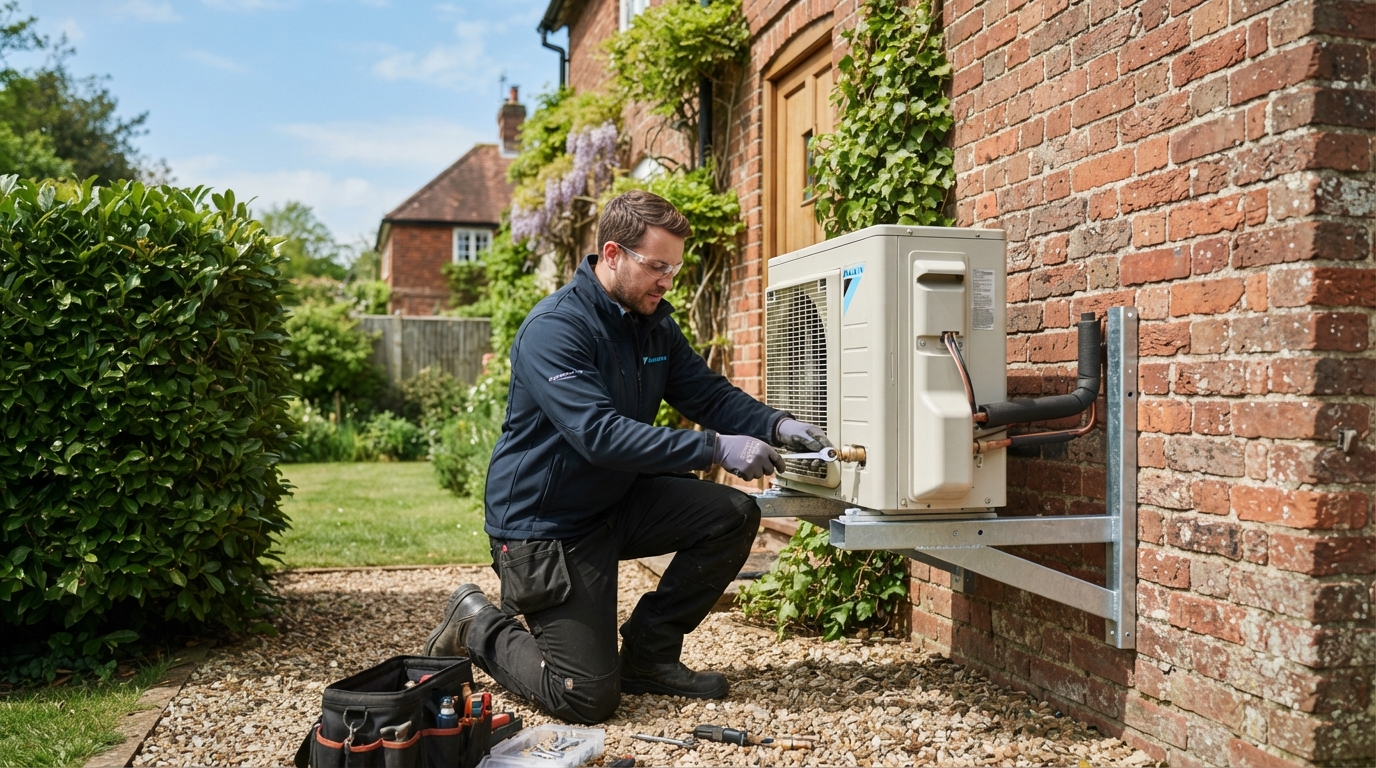
An air source heat pump is a piece of equipment that extracts thermal energy from the outside air and transfers it indoors to provide heating, hot water, or in many commercial installations, both heating and cooling from a single system.
It sounds almost too simple, but that’s the beauty of it. Air, even cold air, still contains usable heat energy, and a well-designed heat pump is very good at capturing it.
How Air Source Heat Pumps Work Step by Step
To really understand how air source heat pumps work, it helps to walk through the refrigeration cycle at the heart of every unit.
- Absorption: Outdoor air passes over an evaporator coil containing refrigerant, which absorbs the ambient heat and turns to gas.
- Compression: The gas is compressed, which raises its temperature significantly.
- Heat transfer: That hot gas passes through a condenser, releasing its heat into your building’s water or air distribution system.
- Expansion and repeat: The refrigerant cools, turns back to liquid, and the cycle begins again.
Of course modern air conditioning units do heating as well! Reversing this same cycle is exactly how a heat pump can cool a building in summer and heat it in winter, which is why so many of the commercial systems we install are dual-purpose from day one.
The Coefficient of Performance: Why How Air Source Heat Pumps Work Beats Traditional Boilers
As a rule of thumb, for every KW of electricity that you feed in when in heating mode, an air conditioning unit will output 2-3 KW because of its dual capability of being a heat pump.
That ratio, known in the industry as the Coefficient of Performance, is the entire commercial case for switching. A gas boiler simply cannot beat physics in the same way, no matter how efficient the burner.
DC Inverter Technology: The Engine Behind How Air Source Heat Pumps Work Efficiently
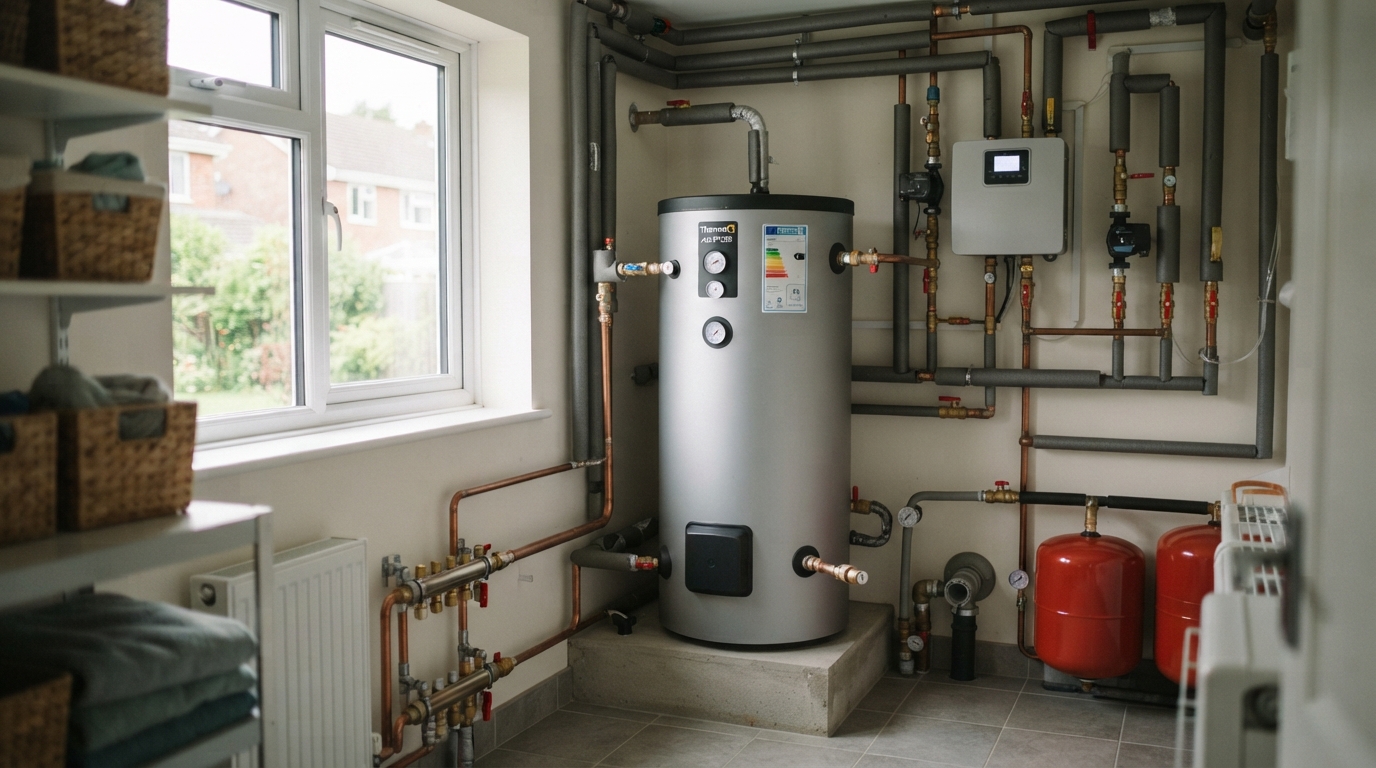
With DC inverter compressors now available on most models, combining cutting edge technology with exceptional performance, speedy and powerful cooling and heating is achieved with minimum power consumption.
Rather than switching on and off at full power like older units, an inverter-driven compressor ramps its speed up and down to match demand exactly. This is a big part of why energy efficient heat pump systems have become the default recommendation for any project large or small that we design.
Did You Know?
Homeowners and businesses in the United Kingdom can access a grant worth £7,500 towards the cost of installing an air source or ground source heat pump.
Source: Future Market Insights
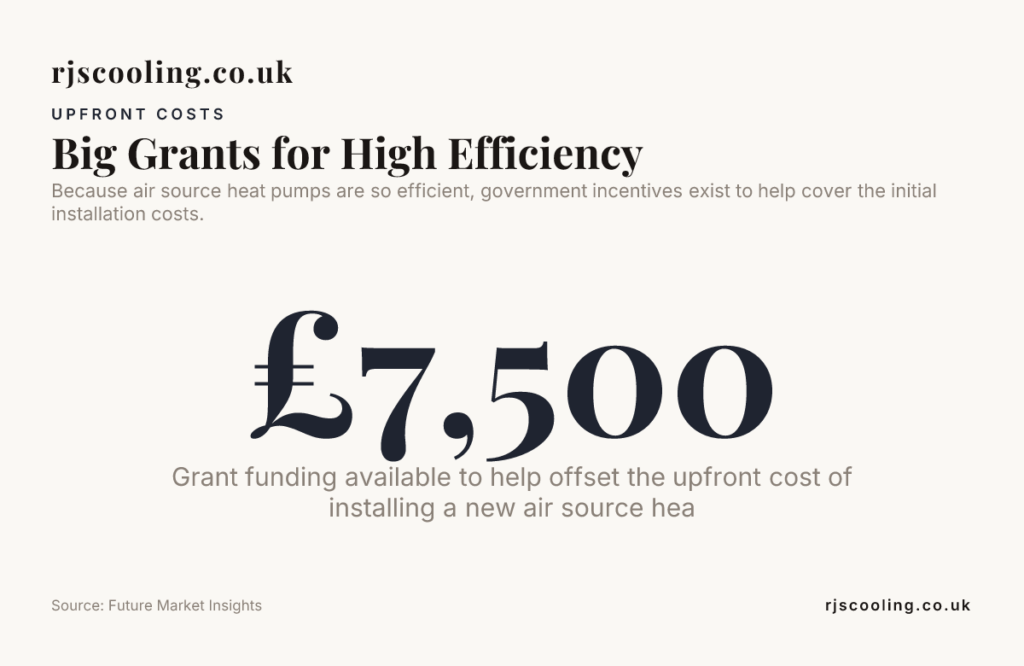
Because air source heat pumps are so efficient, government incentives exist to help cover the initial installation costs.
How Air Source Heat Pumps Work for Commercial and Industrial Buildings
Scale changes everything, and this is where a lot of general explanations of how air source heat pumps work fall short. Cascaded commercial systems can produce anywhere between 7.8 kW and 640 kW of heat output, which is what allows a single installation to serve a school hall, a hospital ward, or a full industrial unit.
Our mission is to provide bespoke cooling and heating installations, servicing and maintenance for the commercial and industrial marketplace and to exceed customer expectations. Whether you’re fitting out a retail space or an entire office block, comfort cooling and heating are no longer treated as separate problems.
With summers becoming warmer and employees becoming less tolerant of uncomfortable working conditions, now may be the time to increase your office workforce productivity by investing in comfort cooling that also handles your winter heating load. You can see the full breadth of our air conditioning, heat pump and refrigeration products to get a sense of what’s available.
Design, Installation and Maintenance: Getting How Air Source Heat Pumps Work Right First Time
Understanding the theory is one thing, but getting a system that actually performs as promised depends on proper design. We have designed and installed a controlled temperature insulated room for the storage of bottled wine, grown on vineyards at MJI Exton, and that project only worked because the design department matched the equipment precisely to the building and the product being stored.
Our design department can find the right system for whatever your needs, whether that’s a single split unit or a full VRF network. Helping our customers minimise their energy use by providing advice on regular maintenance schedules and selection of energy efficient products remains central to how we operate.
Our reputation for leading in quality and innovation has grown through a commitment to constant improvement, ensuring customers receive the very best ventilation products available.
Manufacturer Partnerships That Support How Air Source Heat Pumps Work Reliably
We supply and install products from Mitsubishi Electric, Daikin, LG, Hitachi, Fujitsu and Toshiba, each bringing its own take on inverter technology and refrigerant efficiency. Consumers who own any model of Calorex heat pump or dehumidifier and require repair work or maintenance may come directly to us, and can expect a speedy and reliable service, since we are Approved Service Technicians for Calorex Heat Pumps Ltd.
That direct service agent relationship matters. It means you’re not stuck waiting on a middleman for technical information or spare parts when a unit needs attention.
Real Projects, Real Results: Heat Pumps at Work Across Hampshire
Theory is useful, but nothing demonstrates how air source heat pumps work quite like seeing them running in real buildings. We’ve delivered climate control solutions at Southampton General Hospital, where reliability and energy efficiency were both non-negotiable.
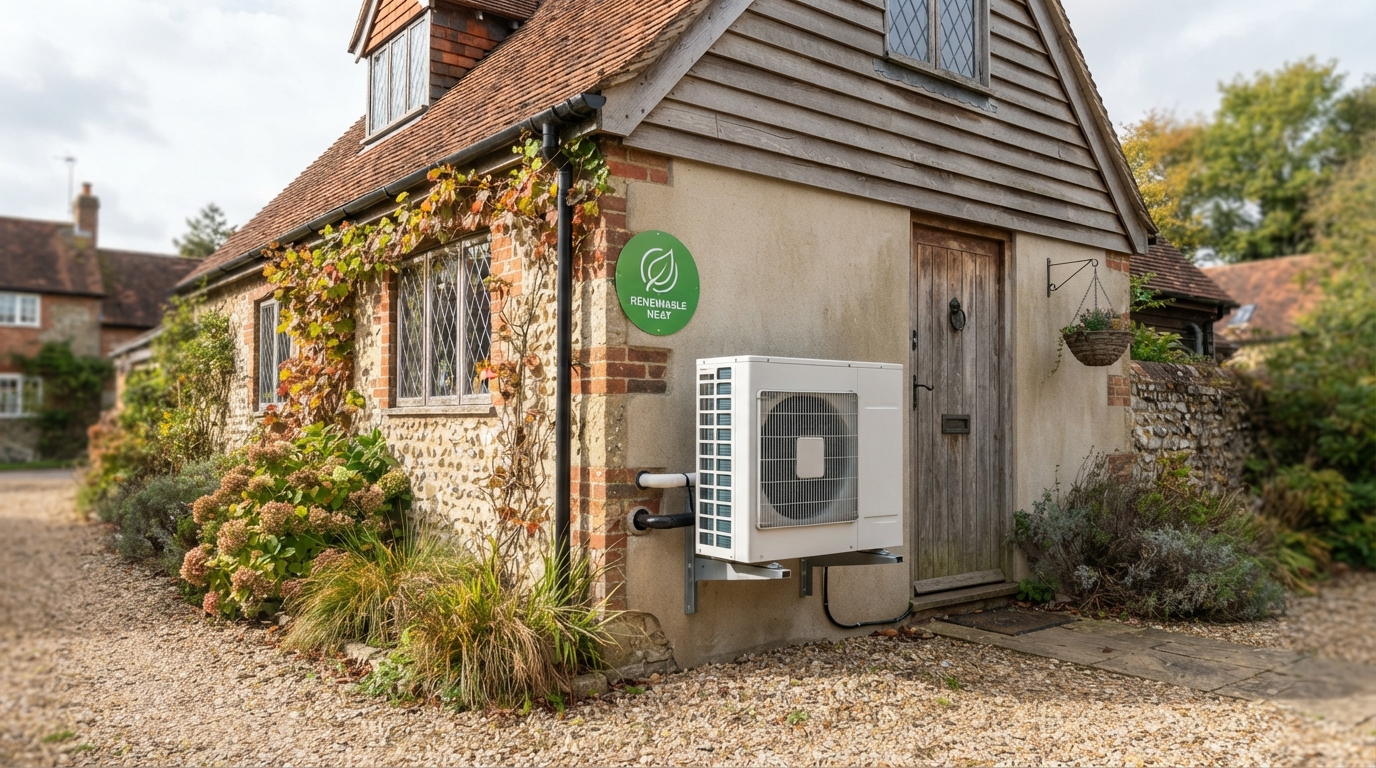
At Chilworth Manor, a historic property demanded a discreet approach, proving that heat pump technology can integrate into heritage buildings without compromising their character. Our work at the MJI Exton vineyard shows the same principles applied to a completely different challenge: precise, controlled temperature storage rather than office comfort.
We’ve also completed installations at Boyatt News and Delicious Dining, two very different commercial environments that both needed dependable, energy efficient climate control. You can browse our full project portfolio to see the range of buildings we’ve worked in.
Heat Pumps and Refrigeration: Where the Technology Overlaps
Anyone asking how air source heat pumps work will eventually bump into commercial refrigeration, because the underlying refrigeration cycle is identical. We provide commercial refrigeration services across Southampton and Portsmouth, and combining that expertise with heat pump installation means we understand the full loop from cold storage through to building-wide heating.
Adoption Is Accelerating, But Awareness Still Lags Behind
Heat pump shipments now account for 57 percent of total space heating shipments, up from 53 percent just two years earlier, which tells you the shift is well underway across the industry.
Did You Know?
Modern cascaded air source heat pumps designed for commercial applications can produce between 7.8 kW and 640 kW of heat output, enough to serve everything from a small office to a full hospital.
Source: Maximize Market Research
Even so, plenty of building owners still aren’t aware of the financial support on offer, with a large share of survey respondents saying they’d never heard of any incentives for electric heating alternatives at all. That’s exactly why we walk every customer through the technical information and funding options before a single unit goes on order.

Why Choose HVAC for Your Heat Pump Installation
We have been established in Hampshire for over 25 years and pride ourselves on our quality of service. Whether you’re based in Southampton, Salisbury, Portsmouth or anywhere else across the county, we cover the full spectrum of climate control solutions.
- Bespoke cooling and heating design tailored to your building
- Professional installation by trained engineers
- Ongoing maintenance and emergency repairs
- Direct service agent status for Calorex heat pumps and dehumidifiers
- Coverage across the Southampton and Hampshire area and Salisbury region
A Sound Investment
Understanding how air source heat pumps work isn’t just an academic exercise, it’s the foundation for making a sound investment in your building’s comfort, running costs and carbon footprint. From the basic refrigeration cycle through to DC inverter compressors and commercial-scale cascaded systems, the technology has matured into something genuinely reliable for homes and businesses alike.
If you’d like advice specific to your property or business, whatever your needs, get in touch with our team and we’ll talk you through the options.
Frequently Asked Questions
How do air source heat pumps work in cold weather?
Air source heat pumps work by extracting thermal energy from outside air even when temperatures drop close to freezing, since air always contains some usable heat energy. Modern units with DC inverter compressors are specifically designed to maintain efficient output through colder months without a significant drop in performance.
Is it worth installing an air source heat pump now?
With grants of up to £7,500 available in the United Kingdom to help cover installation costs, alongside the long-term efficiency gains from the heat pump’s 2-3 KW output for every 1 KW of electricity used, the numbers stack up for most commercial and domestic properties. The technology has also matured considerably, with DC inverter compressors making modern systems far more efficient than earlier generations.
How much does an air source heat pump cost to run compared to gas?
Running costs depend on the Coefficient of Performance of the specific unit, but because a heat pump can output 2-3 KW of heat for every 1 KW of electricity consumed, it typically outperforms a gas boiler on efficiency. A heat pump water heater also produces roughly a third of the carbon dioxide equivalent of a comparable gas tank heater over a year.
Can one system provide both heating and cooling?
Yes, and this is one of the most useful things to understand about how air source heat pumps work. By reversing the refrigeration cycle, the same unit that heats your building in winter can cool it in summer, which is why so many commercial installations we design are specified as dual-purpose from the outset.
What size heat pump does a commercial building need?
Commercial and industrial cascaded systems can be specified anywhere between 7.8 kW and 640 kW depending on the building’s heating demand, occupancy and layout. This is why proper design work matters so much, as the wrong size unit will either struggle to keep up or run inefficiently.
Are heat pumps reliable enough for hospitals and large commercial sites?
Yes, heat pump technology is now well established in high-reliability environments, including large healthcare facilities where consistent climate control is essential. Our own work at Southampton General Hospital demonstrates how these systems can be designed and installed to meet demanding operational requirements.
Who should I contact for heat pump servicing and repairs in Hampshire?
For general servicing, repairs and installation of heat pumps and air conditioning systems across Southampton, Salisbury and the wider Hampshire area, our team handles projects large or small. For Calorex heat pump owners specifically, we operate as direct service agents, so you can come straight to us rather than going through a third party.
Related Posts
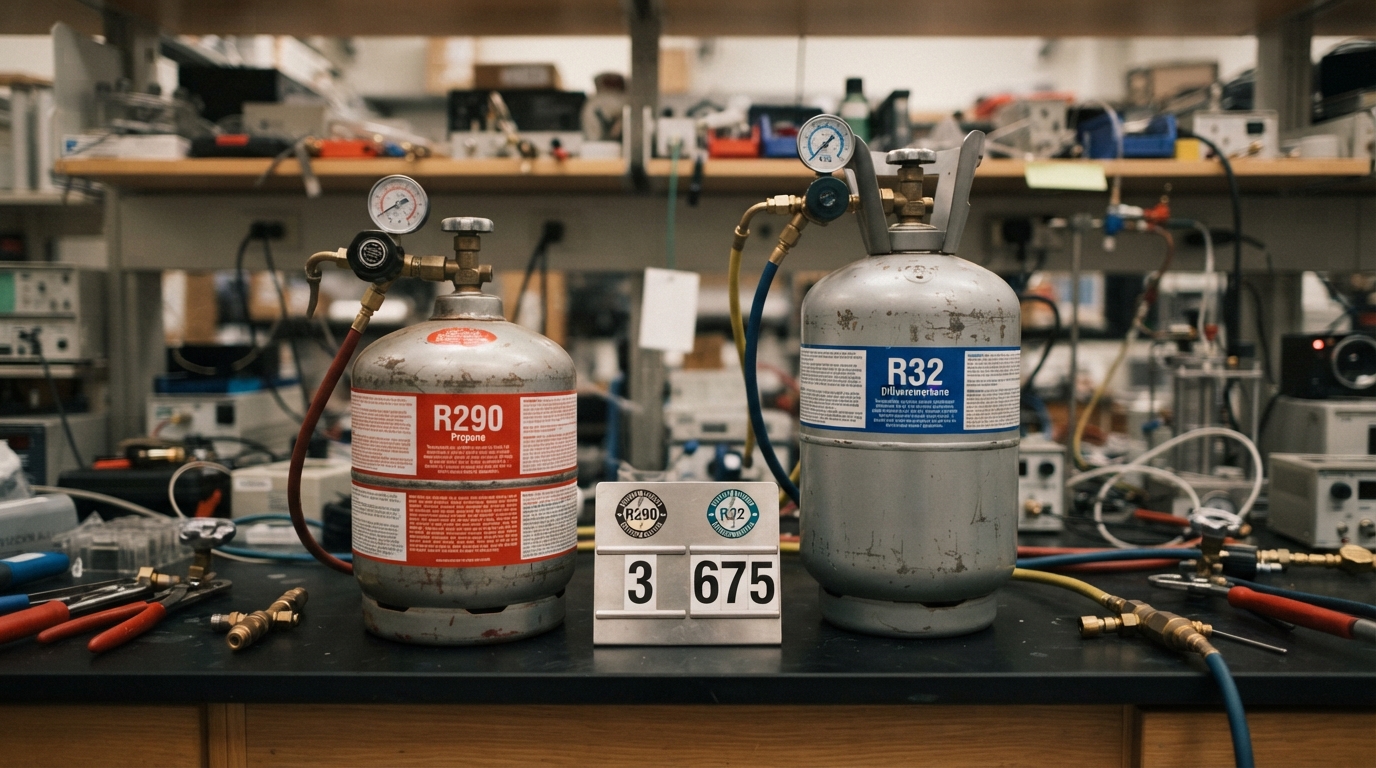
R290 vs R32: Which Natural Refrigerant Maximises Energy Savings?
R290 vs R32: Which Natural Refrigerant Maximises Energy Savings? Did…
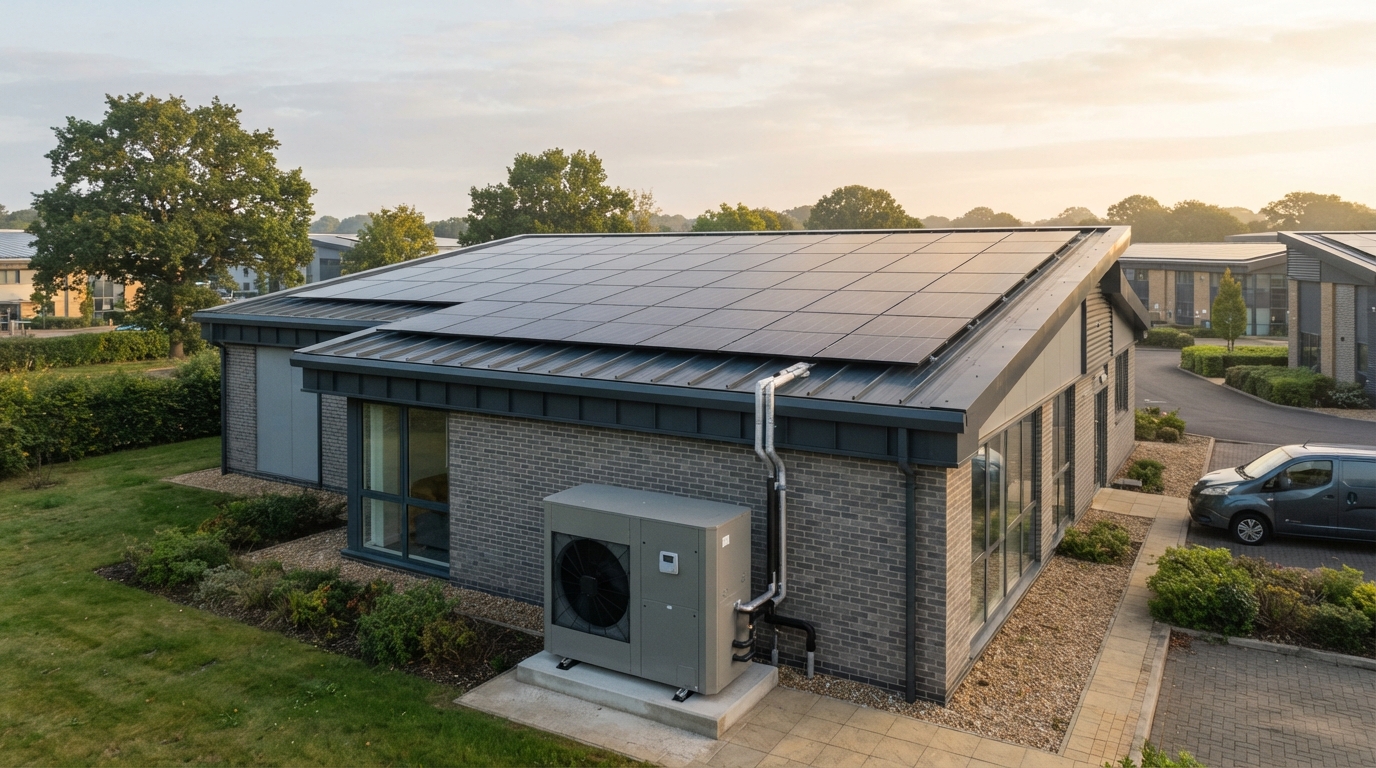
Hybrid Heat Pump & Solar PV Integration: Bespoke Solutions for Southampton and Hampshire Businesses
Hybrid Heat Pump & Solar PV Integration: Bespoke Solutions for…
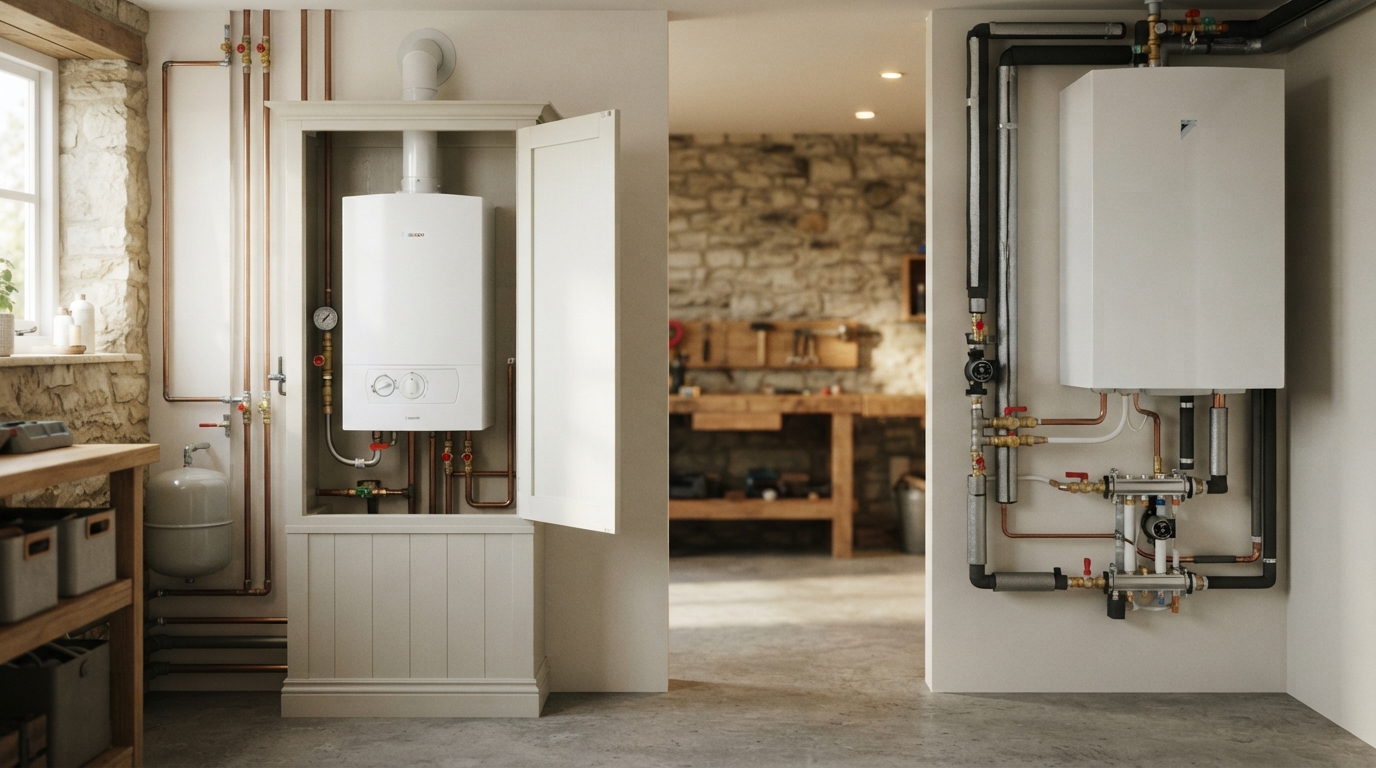
Air Source Heat Pumps v Traditional Heating
Air Source Heat Pumps v Traditional Heating: Which One Actually…