
Air Source Heat Pumps v Traditional Heating: Which One Actually Makes Sense for Your Property?
Did you know that for every single heat pump sold in the UK, installers are still fitting fifteen traditional gas boilers? That gap tells you almost everything you need to know about where the air source heat pumps v traditional heating debate currently stands, and it’s exactly the question our customers across Hampshire keep bringing to us.
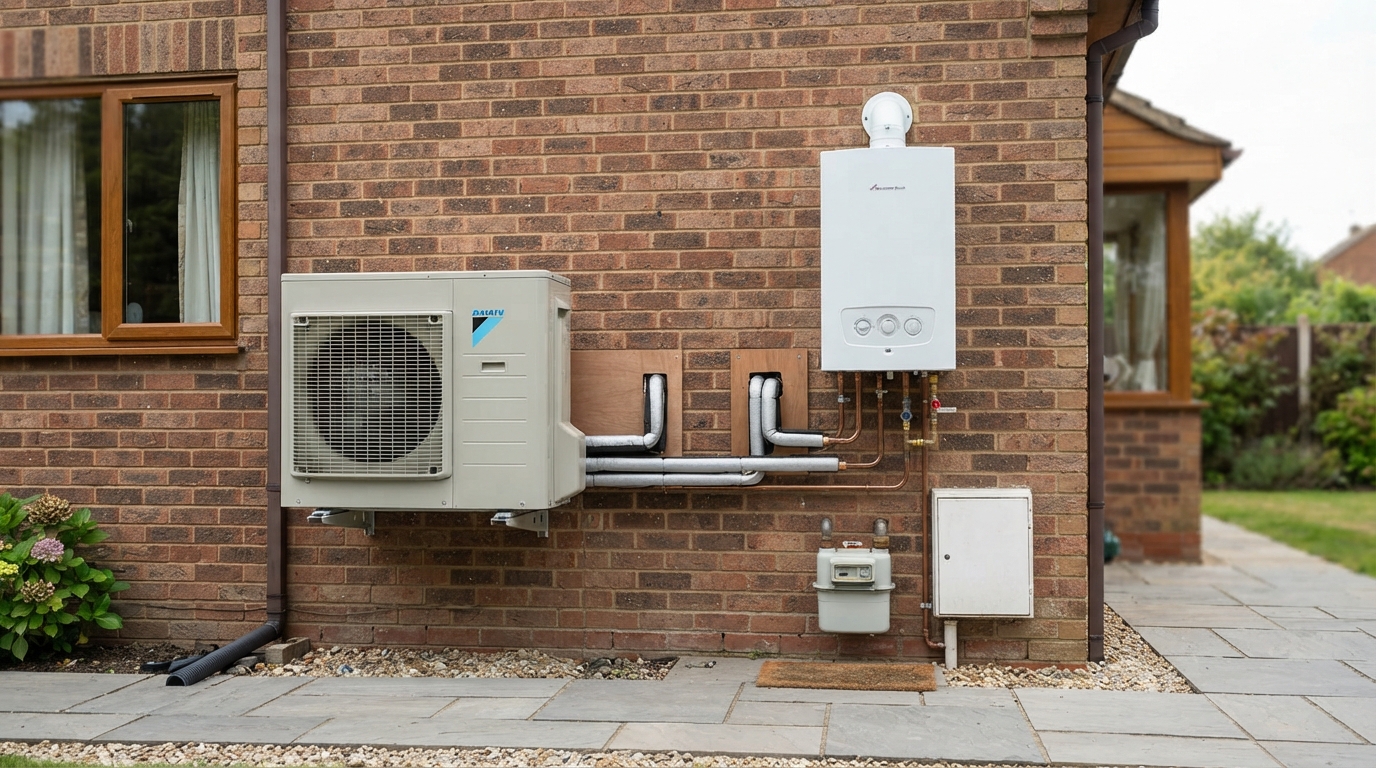
Key Takeaways
| Question | Quick Answer |
|---|---|
| What’s the core difference in air source heat pumps v traditional heating? | A heat pump moves existing warmth from the outside air into your building rather than burning fuel to create heat from scratch. |
| Are heat pumps more efficient than gas boilers? | Yes, heat pumps can reach up to 300% efficiency, while a traditional boiler tops out at around 80%. |
| What does an air source heat pump installation typically cost? | UK Boiler Upgrade Scheme data puts the median installation cost at £13,002, though bespoke commercial systems vary. |
| How many UK homes currently run on heat pumps? | Only around 1% of UK homes rely on a heat pump for heating, showing how much room there is for growth. |
| Do heat pumps work in cold weather? | Modern cold-climate models remain efficient down to temperatures as low as -13°F, so UK winters are well within their range. |
| Can heat pumps also provide cooling? | Of course modern air conditioning units do heating as well, and the reverse is true too, many heat pump systems provide both comfort cooling and heating from one piece of kit. |
| Who should I trust for heat pump installation and servicing? | Look for an established local specialist. We’ve been fitting heat pump solutions across Hampshire for over 25 years. |
What Is the Real Difference Between Air Source Heat Pumps and Traditional Heating?
Traditional heating, whether that’s a gas boiler, an oil-fired system, or electric resistance heaters, works by generating heat directly. Fuel is burned or electricity is converted straight into warmth, and none of it is “borrowed” from anywhere else.
An air source heat pump works differently. It extracts existing thermal energy from the outside air, even on a cold day, and concentrates it using a compressor before pushing it into your building via a heat exchanger.
As a rule of thumb, for every KW of electricity that you feed in when a heat pump is running in heating mode, you’ll get back two to three times that in usable heat, and that’s the whole reason the air source heat pumps v traditional heating comparison so often favours the heat pump. Traditional systems simply can’t multiply their input energy in the same way.
How Do Air Source Heat Pumps v Traditional Heating Compare on Running Costs?
This is the question every business owner actually wants answered, and it’s fair to say the numbers are compelling. Heat pumps typically deliver 3 to 5 kWh of usable heat for every 1 kWh of electricity consumed, which is a ratio no gas boiler or electric heater can match.
Traditional heating burns through its fuel source at a roughly one-to-one ratio, minus losses through flues, ducting, and inefficient distribution. Over the course of a heating season, that difference adds up to a meaningful saving on your energy bill, particularly for commercial and industrial buildings running long hours.
We’ve helped Hampshire businesses of every size understand these numbers before they commit to a system, because a bespoke cooling and heating installation should be sized correctly for the building, not sold as a one-size-fits-all box. You can browse our full heat pump range to see the technology options currently available.
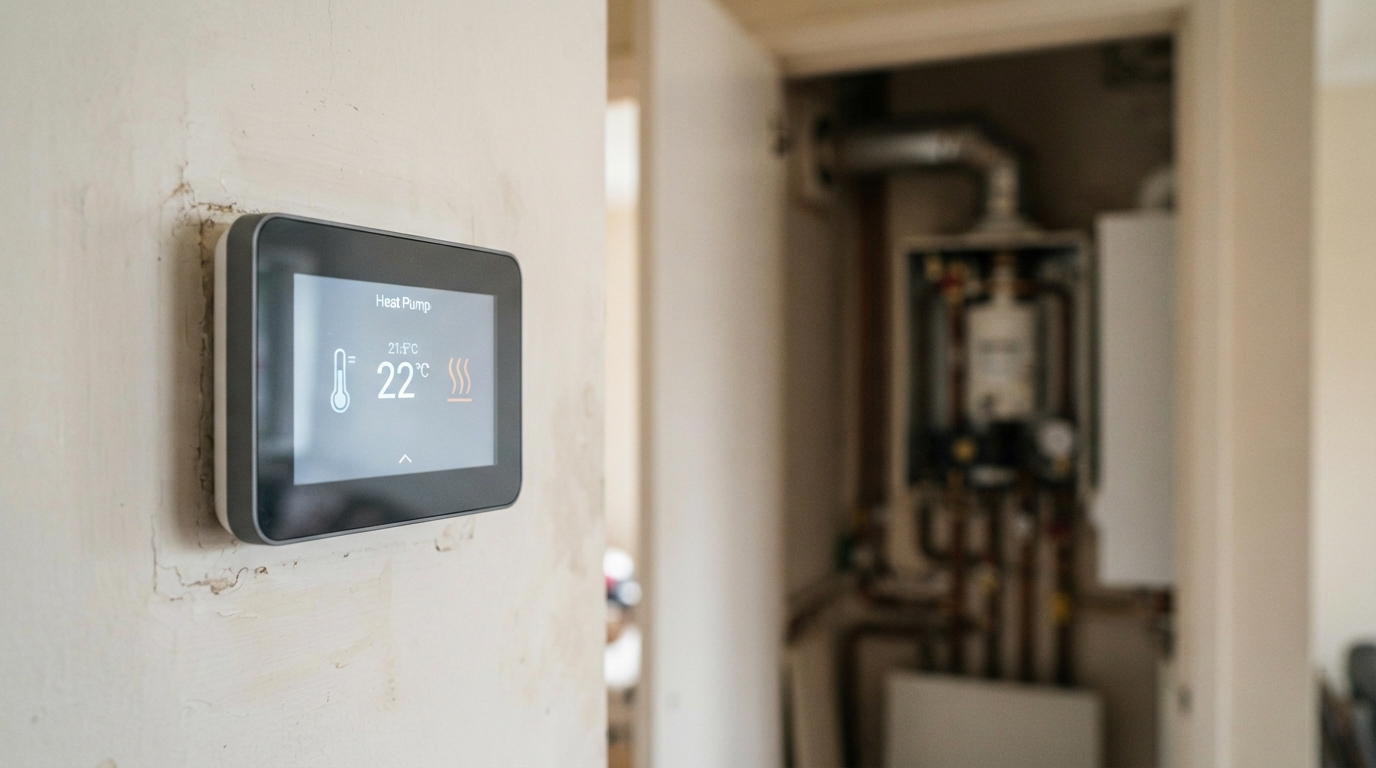
Efficiency Explained: Why Heat Pumps Outperform Traditional Boilers
With DC inverter compressors now available on most models, combining cutting edge technology with exceptional performance, speedy and powerful heating is achieved with minimum power consumption. That’s a genuine technical leap over older heat pump designs and it’s part of why the efficiency gap over traditional heating keeps widening.
It isn’t all one-sided, though, and we believe in giving you the full technical picture rather than a sales pitch. Real-world data shows that around 17% of air source heat pumps fail to meet their advertised efficiency standards once installed, usually down to poor design or incorrect settings rather than a fault with the technology itself.
A further 10% of systems are found to be oversized for the property they’re heating, which drags down efficiency and pushes running costs back up. This is precisely why correct sizing and a proper design process matter more with heat pumps than with a traditional boiler, where oversizing is far more forgiving.
Did You Know?
The median cost for an air source heat pump installation under the UK’s Boiler Upgrade Scheme sits at £13,002.
Source: Elite Renewables
Air Source Heat Pumps v Traditional Heating: What Does Installation Actually Cost?
There’s no getting away from it, a heat pump generally costs more upfront than replacing a like-for-like gas boiler. Grant schemes have helped push median installation costs to around £13,002, and that figure covers the unit, groundwork, and a properly sized heat exchange system.
Traditional boiler replacements are usually cheaper to fit, which is one of the reasons fifteen gas boilers are still sold for every heat pump in the UK. But that upfront saving needs to be weighed against the running cost efficiency a heat pump delivers year after year, and against rising fuel prices for oil and gas.
Our design department looks at every project individually, whatever your needs, whether that’s a small office retrofit or a full commercial installation, so you get a quote based on your actual building rather than a generic estimate. Take a look through our full range of HVAC products to see what a bespoke system could look like for your premises.
Calorex Heat Pumps: Our Approved Service Partnership
We’re proud to say we are Approved Service Technicians for Calorex Heat Pumps Ltd, which means consumers who own any model of Calorex heat pump or dehumidifier and require repair work or maintenance can come directly to us, rather than going through a middleman. Speedy and reliable service is what we’ve built our reputation on.
Our reputation for leading in quality and innovation has grown through a commitment to constant improvement, ensuring customers receive the very best heat pump and ventilation products available. If you’re weighing up air source heat pumps v traditional heating for a commercial property, being able to speak directly to an approved service agent, rather than a call centre, makes a real difference when something needs fixing quickly.
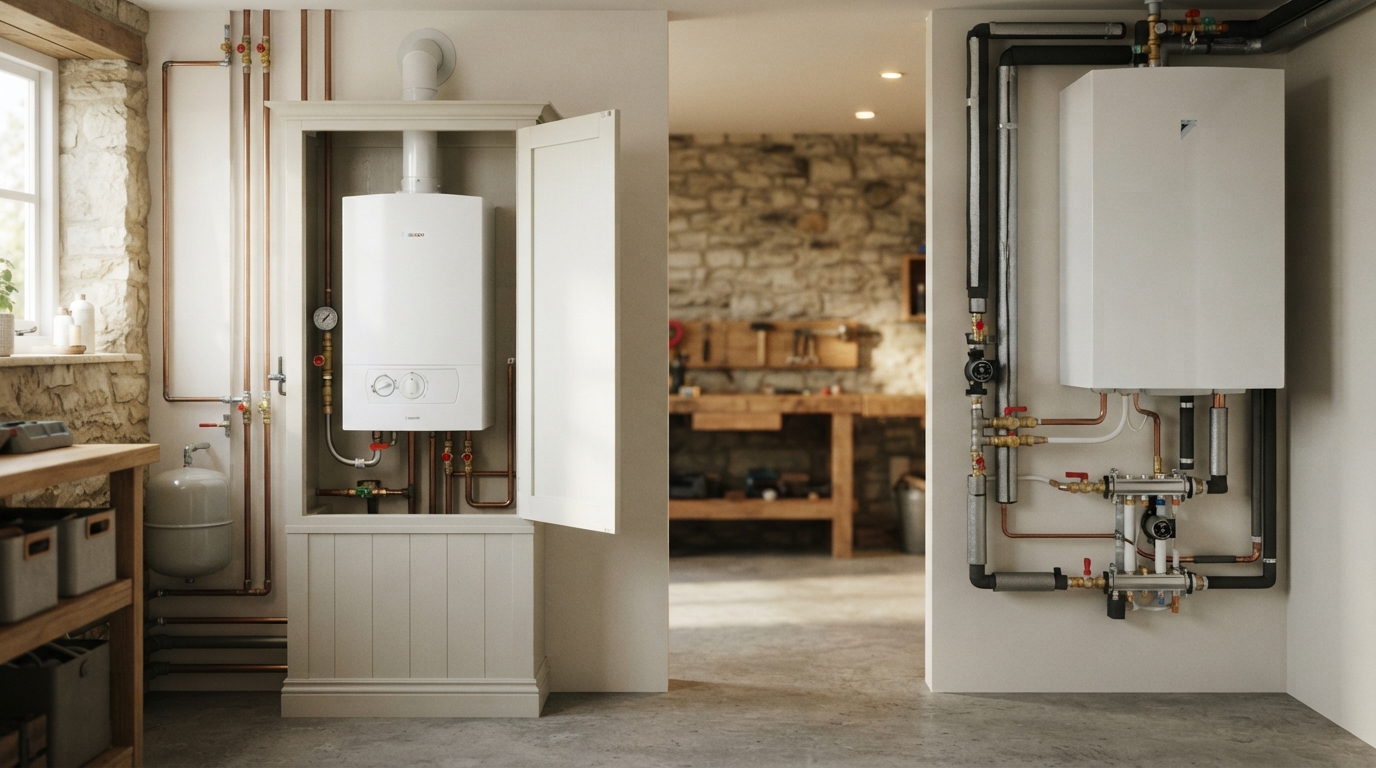
Real-World Performance: What the Data Tells Us About Heat Pump Efficiency
Numbers on a spec sheet are one thing, real installations are another, and we’ve learned that lesson first-hand on some fairly unusual projects. We designed and installed a controlled temperature insulated room for the storage of bottled wine, grown on vineyards at MJI Exton, where precise, stable climate control was non-negotiable.
That kind of project shows exactly why the air source heat pumps v traditional heating question isn’t purely academic. A heat pump’s ability to hold a steady temperature efficiently, without the on-off cycling common to older boiler systems, made it the right technology for a job where consistency mattered as much as running cost.
Public awareness of air source heat pumps has grown to around 79% across the UK, yet only a small fraction of homes and businesses have actually made the switch. That gap between awareness and adoption is closing, but it tells us plenty of building owners are still doing their research before committing, which is exactly the advice-driven approach we take with every enquiry.
Is an Air Source Heat Pump Right for Your Business?
With summers becoming warmer and employees becoming less tolerant of uncomfortable working conditions, now may be the time to think about comfort cooling and heating together rather than as separate problems. Of course modern air conditioning units do heating as well, and for many commercial buildings, a single system that handles both jobs is far more cost-effective than running two.
We’ve delivered climate control solutions for a wide range of settings, from historic buildings like Chilworth Manor to demanding healthcare environments at Southampton General Hospital. Every one of those projects needed a different answer to the air source heat pumps v traditional heating question, because the right system depends entirely on the building, its usage patterns, and its existing infrastructure.
Did You Know?
Switching to a heat pump powered by clean electricity can cut a home’s emissions by up to 80%.
Source: Elite Renewables
Traditional Heating Systems: When Do They Still Make Sense?
We’re not here to tell you a heat pump is right for every single building, because that wouldn’t be honest advice. Older properties with poor insulation, or buildings needing very high flow temperatures for existing radiators, can sometimes struggle to get the full benefit from a heat pump without additional upgrades.
Traditional heating remains a straightforward, well-understood option in those cases, and a gas boiler is still quicker and cheaper to install where the infrastructure is already in place. If you’re running a commercial kitchen or a site with very specific heat demands, it’s worth getting a proper site survey rather than assuming one technology fits your circumstances.
We cover this exact conversation with clients across our service area, including our work in Southampton and Hampshire and further afield through our Salisbury operations. Helping our customers minimise their energy use by providing advice on regular maintenance schedules and selection of energy efficient products is part of our mission, whichever system ends up being the right fit.
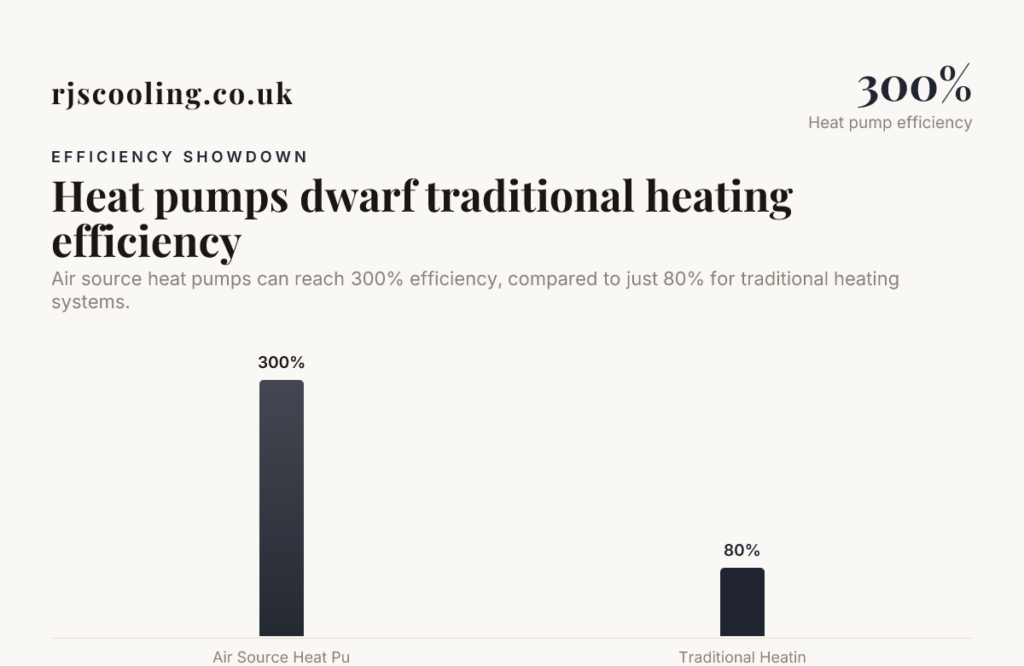
Air source heat pumps can reach 300% efficiency, compared to just 80% for traditional heating systems.

Getting the Air Source Heat Pumps v Traditional Heating Decision Right
Every building tells its own story, and that’s why we treat every project large or small the same way, with a proper survey first and a recommendation second. Our mission is to provide bespoke cooling and heating installations, servicing and maintenance for the commercial and industrial marketplace, and to exceed customer expectations along the way.
Whether you’re leaning towards a heat pump or sticking with a traditional boiler, getting expert, unbiased technical information before you commit will save you money and hassle down the line. We have been established in Hampshire for over 25 years and pride ourselves on our quality of service, so we’re not going anywhere if you need us again after the installation is done.
Get a Proper Site Assessment
The air source heat pumps v traditional heating decision ultimately comes down to your building, your budget, and how long you plan to be running the system. Heat pumps win comfortably on efficiency and running costs, often multiplying every unit of electricity into two or three units of usable heat, while traditional heating still holds its ground for lower upfront cost and simpler installation in certain properties.
Our advice is always the same: get a proper site assessment before choosing either way. If you’d like to talk through your options with a local team that’s been doing exactly this across Hampshire for over 25 years, get in touch with us and we’ll help you find the right answer for your building.
Frequently Asked Questions
Is an air source heat pump actually better than a gas boiler?
In terms of raw efficiency, yes, an air source heat pump can reach up to 300% efficiency compared to roughly 80% for a well-maintained gas boiler. Whether it’s “better” for your specific property depends on insulation levels, existing radiators, and upfront budget.
How much does it cost to switch from traditional heating to an air source heat pump?
UK data puts the median air source heat pump installation cost at £13,002 under current grant schemes, though commercial and bespoke installations vary depending on building size and design. A traditional boiler swap is usually cheaper upfront but doesn’t deliver the same long-term efficiency gains.
Do air source heat pumps work well in cold UK winters?
Yes, modern cold-climate heat pumps remain efficient down to temperatures as low as -13°F, which is far colder than the UK typically experiences. Properly sized units handle British winters comfortably in the air source heat pumps v traditional heating comparison.
Why do so many people still choose traditional heating over heat pumps?
Cost and familiarity are the biggest factors, with roughly fifteen gas boilers still sold for every single heat pump installed in the UK. Lower upfront installation costs and simpler like-for-like replacements keep traditional heating popular, even though running costs are usually higher over time.
Can a heat pump provide both heating and cooling for my business?
Yes, of course modern air conditioning units do heating as well, and many heat pump systems are designed from the outset to provide both comfort cooling and heating from a single unit. This dual capability is one of the strongest arguments in the air source heat pumps v traditional heating debate for commercial buildings.
Is switching to an air source heat pump worth it for a commercial property?
For most commercial and industrial buildings running long operating hours, the efficiency of a heat pump usually pays back the higher installation cost over time. A proper site survey from an experienced installer is the best way to confirm the numbers work for your specific premises.
What should I check before choosing a heat pump installer?
Look for approved service technician status with a recognised manufacturer, a proven local track record, and a design department willing to size the system correctly for your building. Direct access to a service agent, rather than a call centre, matters enormously once your system needs maintenance or repair.
Related Posts
R290 vs R32: Which Natural Refrigerant Maximises Energy Savings?
R290 vs R32: Which Natural Refrigerant Maximises Energy Savings? Did…
Hybrid Heat Pump & Solar PV Integration: Bespoke Solutions for Southampton and Hampshire Businesses
Hybrid Heat Pump & Solar PV Integration: Bespoke Solutions for…
How Air Source Heat Pumps Work
How Air Source Heat Pumps Work: A Straightforward Guide for…