
Measuring Seasonal COP in Multi-Pack Refrigeration Systems Accurately: A Hampshire Engineer’s Guide
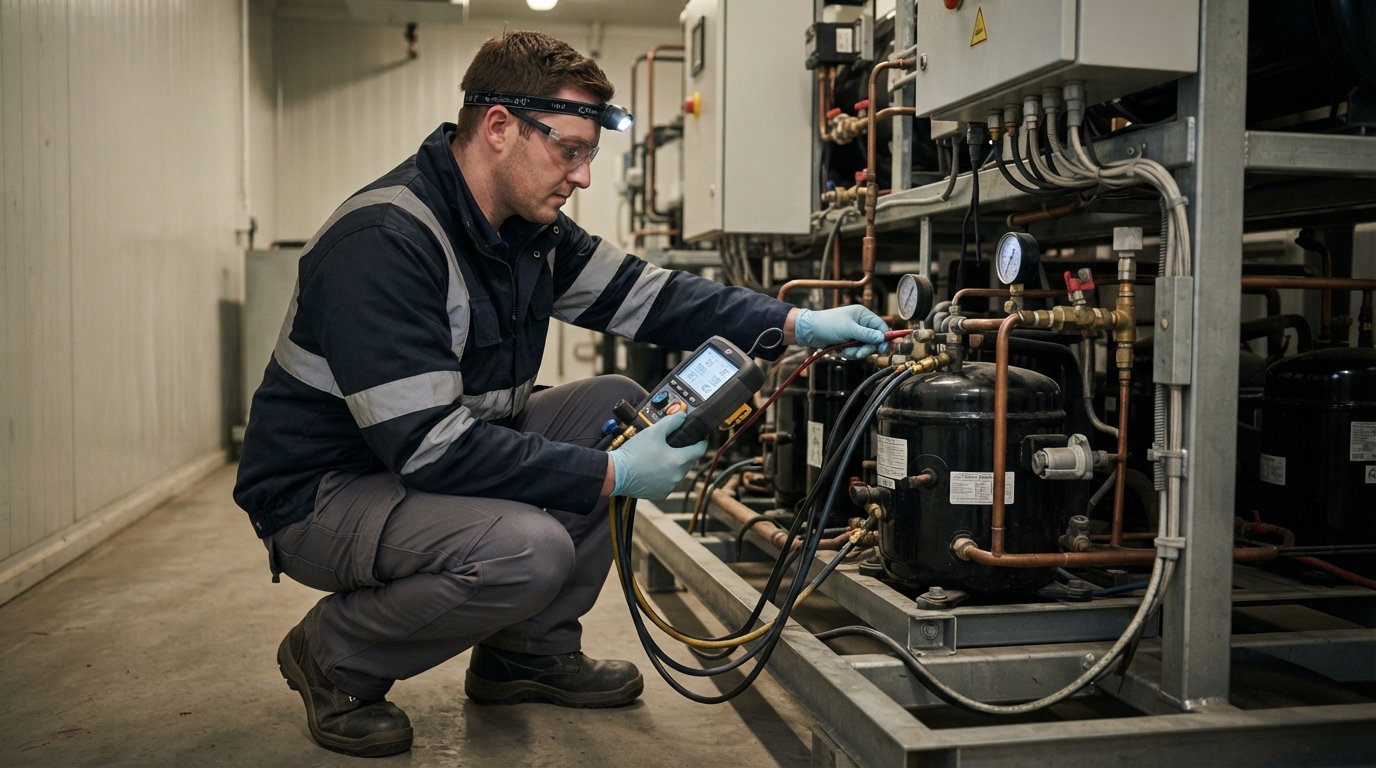
Getting measuring seasonal COP in multi-pack refrigeration systems accurately right matters more than most site managers realise, because commercial refrigeration facilities that fine-tune performance with integrated motor control valves and sensors can save as much as $200,000 a year in energy costs. That single figure explains why so many of our commercial clients across Southampton, Portsmouth and the wider Hampshire area now ask us to look beyond the nameplate rating and tell them what their multi-pack system is actually doing across a full year of trading.
Key Takeaways
| Question / Aspect | What It Means For Your System |
|---|---|
| What is seasonal COP? | The average coefficient of performance a refrigeration system achieves across an entire year, accounting for load swings, ambient temperature and defrost cycles, rather than a single lab-tested figure. |
| Why is it harder in multi-pack systems? | Multiple compressors sharing one condenser bank means load diversity, staging and pack sequencing all distort a simple instantaneous reading. |
| What data do we actually need? | Suction and discharge pressures, condenser fan run-hours, ambient temperature logs and total kWh draw over a minimum 12-month cycle. |
| Does refrigerant type affect the result? | Yes. Transitioning to R290 or other natural refrigerants changes both the pressure/temperature curve and the achievable COP band. |
| How often should we re-measure? | At minimum annually, and after any major service, condenser clean or compressor replacement. |
| Who should carry out the measurement? | A qualified commercial refrigeration contractor with calibrated logging equipment, not a one-off site visit. |
| Where can I see real installations? | Browse our completed refrigeration and HVAC projects across Hampshire to see multi-pack systems in working environments. |
What Is Seasonal COP and Why Multi-Pack Systems Make It Hard to Measure
Seasonal COP (often written SCOP) is simply the ratio of cooling delivered to electrical energy consumed, averaged across a full heating and cooling season rather than a single snapshot test.
On paper that sounds straightforward. In practice, a multi-pack refrigeration system is a moving target because it’s rarely running at one fixed load; it cycles compressors up and down as chill cabinets, cold rooms and freezer units call for cooling at different times of day.
As a rule of thumb, the more compressors sharing a single condenser and pipework network, the more variables there are to log before you can trust a seasonal figure. That’s exactly why measuring seasonal COP in multi-pack refrigeration systems accurately demands continuous data logging rather than a manufacturer’s headline efficiency claim.
Commercial Refrigeration Southampton and Hampshire: How We Approach the Problem
We have been established in Hampshire for over 25 years, and in that time we’ve serviced everything from small retail chill cabinets to full industrial refrigeration plant rooms.
Our mission is to provide bespoke cooling and heating installations, servicing and maintenance for the commercial and industrial marketplace and to exceed customer expectations, and accurate performance data sits right at the centre of that.
When we look at commercial refrigeration in Southampton and Portsmouth, we don’t just check the gas pressure and walk away. We install temporary or permanent logging on the compressor rack, the condenser fans and the total electrical supply, then track that data through the warmest and coldest weeks of the year so the seasonal COP figure actually reflects real trading conditions, not a single afternoon’s reading.
Measuring Seasonal COP in Multi-Pack Refrigeration Systems Accurately: The Key Data Points
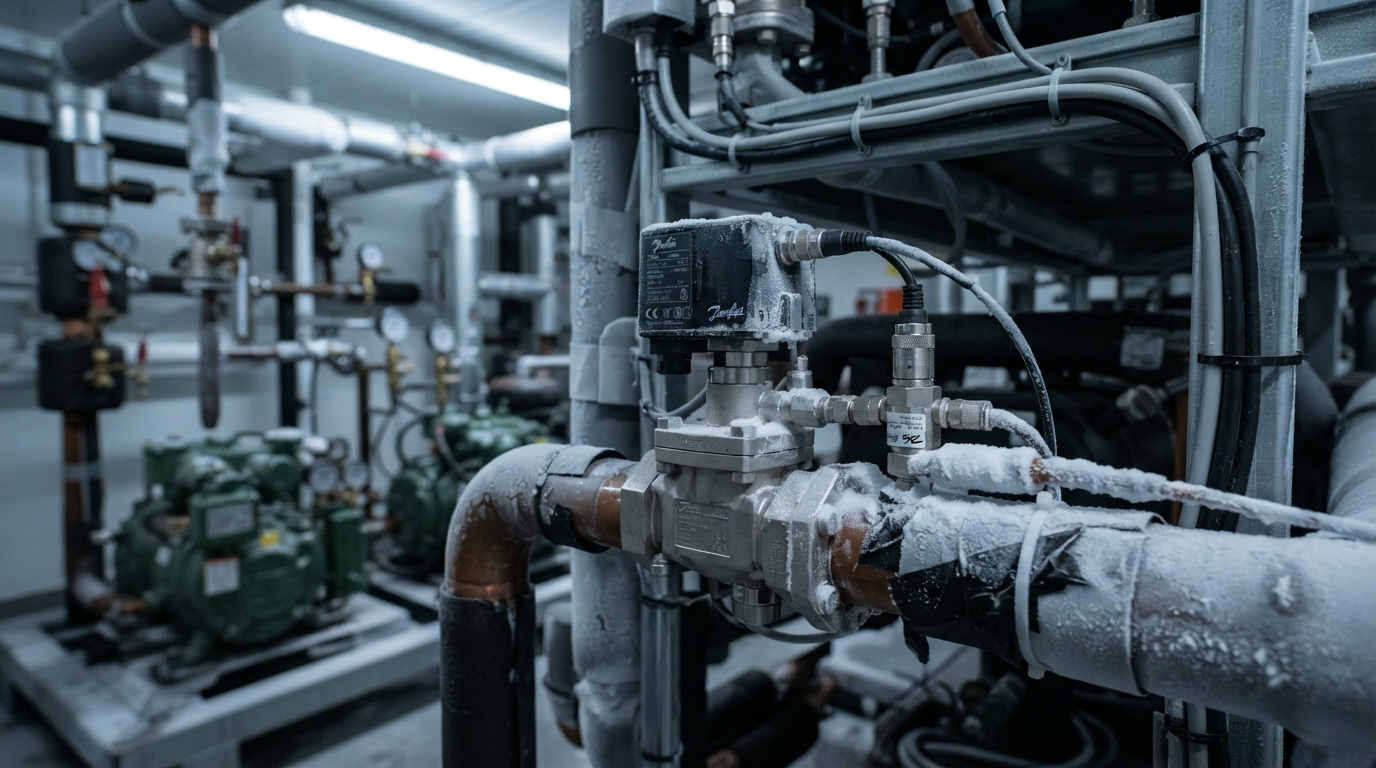
To get a genuinely accurate seasonal COP, you need more than one number. You need a data set that captures how the whole refrigeration gas circuit behaves under varying ambient conditions.
Here’s what we log and why each figure matters:
- Suction and discharge pressure: tells us how hard each compressor is working relative to the refrigerant charge and system design.
- Condenser approach temperature: a dirty or undersized refrigeration condenser will quietly drag COP down without tripping any alarms.
- Ambient dry-bulb temperature: essential for correlating performance dips with hot summer afternoons or cold winter nights.
- Total kWh draw at the distribution board: the true energy input figure, not an estimate from the compressor’s rated power.
- Defrost frequency and duration: every defrost cycle is energy in with zero useful cooling out, so it drags the seasonal average down.
- Load diversity across the pack: how many compressors are actually running simultaneously versus sitting idle.
Skip any one of these and your seasonal COP figure becomes a guess dressed up as data. That’s a mistake we see a lot when someone relies on a single refrigeration engineer’s site visit instead of a full monitoring period.
Did You Know?
New refrigeration compressor rack systems must demonstrate energy consumption at least 20% lower than existing systems to qualify for energy efficiency incentive programmes.
Source: Con Edison
Refrigeration Condensers, Compressors and Load Diversity: Where Multi-Pack Readings Go Wrong
Most inaccurate seasonal COP figures we come across trace back to one of two things: an undersized or fouled refrigeration condenser, or load diversity that was never properly accounted for.
A condenser that’s coping fine at 40% load in spring can struggle badly on a warm July afternoon, and if your logging period doesn’t cover that peak, your seasonal COP figure will be optimistic and misleading. Container refrigeration units and unit coolers on external walls are particularly exposed to this because ambient swings hit them directly.
Compressor staging is the other trap. On a multi-pack system, the lead compressor often runs almost continuously while lag compressors cycle in only during peak demand.
If you measure COP while only the lead compressor is running, you’ll get a flattering number that has nothing to do with how the system behaves during a busy trading weekend. This is exactly the kind of nuance our design department accounts for when specifying whatever your needs are, whether that’s a small cooler unit for a convenience store or a full industrial refrigeration plant room.
R290 Heat Pumps, VRF Units and Related Cooling Technologies Feeding Into SCOP
Of course modern air conditioning and refrigeration units do heating as well, and the crossover with heat pump technology is directly relevant to how we approach seasonal performance testing!
As a rule of thumb, for every kW of electricity fed into a heat pump in heating mode, the unit will output 2-3 kW because of its dual capability of drawing ambient heat rather than generating it from scratch. The same physics underpins why accurate seasonal measurement matters just as much for a VRF cooling network as it does for a refrigeration chiller.
With DC inverter compressors now standard on most VRF units, combining cutting-edge technology with exceptional performance, speedy and powerful cooling and heating is achieved with minimum power consumption, and that efficiency curve needs to be tracked seasonally rather than assumed from a spec sheet.
Calorex Heat Pumps: A Case in Point
We are proud to be approved service technicians for Calorex Heat Pumps Ltd, and consumers who own any model of Calorex heat pump or dehumidifier and require repair work or maintenance may come directly to us and expect a speedy and reliable service.
Calorex units are a good illustration of why seasonal, rather than instantaneous, COP measurement matters: a dehumidifying heat pump’s efficiency shifts noticeably with ambient humidity and temperature, much like a refrigeration chiller’s efficiency shifts with outdoor air temperature across the year. You can see more on our heat pump servicing and maintenance page.

Case Study: Cellar Cooling and Controlled Temperature Storage at MJI Exton Vineyard
We have designed and installed a controlled temperature insulated room for the storage of bottled wine, grown on vineyards at MJI Exton, and it’s one of our favourite examples of why accurate seasonal performance data matters.
Cellar cooling has a very narrow acceptable temperature and humidity band, and unlike a walk-in freezer that can tolerate small swings, wine storage cannot. That meant we needed genuinely accurate seasonal COP data before we could even specify the refrigeration equipment, because an undersized system would drift out of tolerance on the warmest days of summer, and an oversized one would short-cycle and waste energy all year round.
You can read more detail on that project on our MJI Exton vineyard cellar cooling case study.
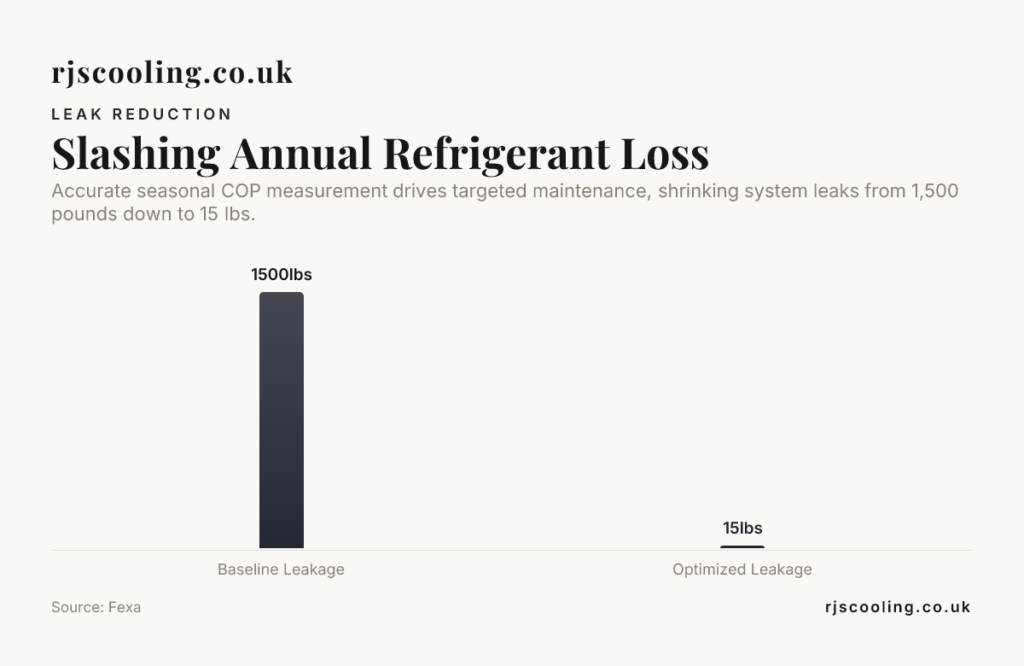
Accurate seasonal COP measurement drives targeted maintenance, shrinking system leaks from 1,500 pounds down to 15 lbs.
Restaurant, Retail and Convenience Store Refrigeration: Real-World Multi-Pack Examples
Not every multi-pack system needs the precision of a wine cellar, but every one of them still benefits from accurate seasonal data.
Our project at Boyatt News convenience store and Post Office in Eastleigh involved commercial refrigeration where multiple chill and freezer cabinets share a single plant, exactly the kind of small refrigeration setup where load diversity readings are easy to get wrong if you only log for a day or two.
Restaurant refrigeration presents a different challenge again. Our work on the Delicious Dining group of restaurants and bars combined refrigeration and air conditioning in one project, and kitchens like these see extreme demand spikes during service that a short-term reading simply won’t capture.
Hospitality venues also lean heavily on comfort cooling for front-of-house areas, and with summers becoming warmer and customers becoming less tolerant of uncomfortable dining conditions, getting both the refrigeration and the air conditioning performance data right protects both stock and workforce productivity behind the bar.
Did You Know?
Systems holding a full refrigerant charge of 1,500 pounds or more now require automatic leak detection to stay compliant, directly linking accurate monitoring to seasonal COP integrity.
Source: Fexa
Refrigeration Gas, Glycol Circuits and Absorber Chillers: Extra Variables Affecting SCOP
The refrigeration gas you’re running has a direct bearing on the seasonal COP band you should expect. Transitional refrigerants, R290 and other natural options each carry different pressure/temperature curves, so switching gas without re-measuring afterwards leaves you guessing.
Glycol refrigeration systems add another layer, because the secondary loop introduces its own pump energy draw and heat exchanger losses that need to be logged separately from the primary compressor circuit. An absorber chiller, meanwhile, doesn’t behave anything like a conventional vapour-compression refrigeration chiller, so lumping it into the same seasonal COP calculation as a standard multi-pack rack will skew your figures badly.
If your site runs a chiller in fridge form, feeding chilled water to multiple cabinets, you’ll want separate logging on the chiller plant itself and on each downstream unit cooler, otherwise inefficiencies at either end get masked by the average.
Choosing a Refrigeration Engineer for Accurate Seasonal COP Testing
Not every refrigeration company offers genuine seasonal monitoring as standard, and it’s worth asking directly before you commit to a maintenance contract.
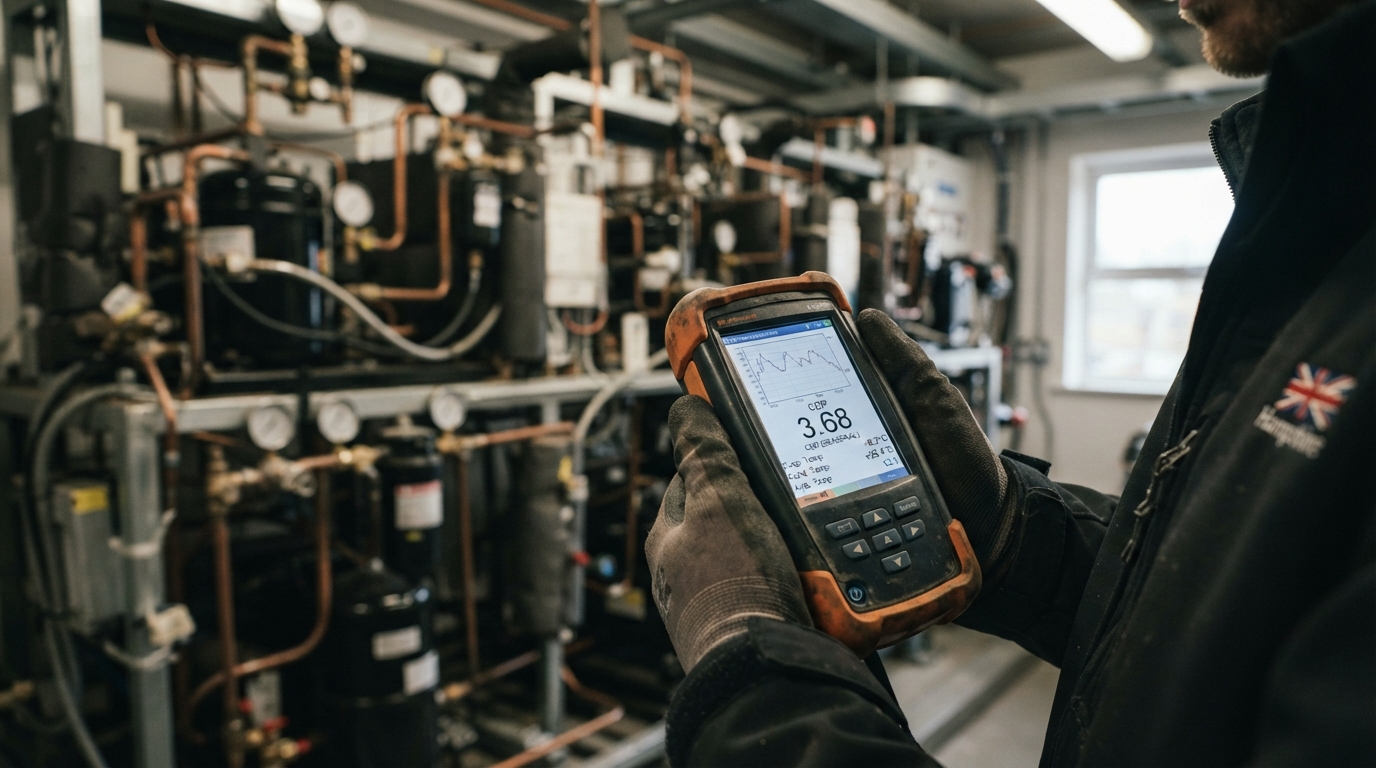
When you search for a refrigeration engineer or refrigeration companies near me, ask specifically how they log data across the year rather than relying on a single site visit. A proper answer should mention continuous logging equipment, ambient temperature correlation and load diversity tracking, not just a gauge reading taken on the day.
Our reputation for leading in quality and innovation has grown through a commitment to constant improvement, ensuring customers receive the very best refrigeration and air conditioning products available, backed by data rather than assumption. We help our customers minimise their energy use by providing advice on regular maintenance schedules and selection of energy efficient products, whatever the size of the project.
Whether you’re running a single cooler unit or a full multi-pack industrial refrigeration installation, browse our air conditioning and refrigeration product range or get in touch through our contact page to discuss a monitoring programme suited to your site.
Conclusion
Measuring seasonal COP in multi-pack refrigeration systems accurately isn’t a one-visit job, and any figure produced from a single reading should be treated with caution. It takes continuous logging across suction and discharge pressure, ambient temperature, defrost cycles and load diversity to build a number you can actually trust and act on.
We have been established in Hampshire for over 25 years, and whether it’s a convenience store cold room, a restaurant kitchen or a bespoke wine cellar at a vineyard, our approach to measuring seasonal COP in multi-pack refrigeration systems accurately stays the same: log it properly, across a full year, before you draw conclusions.
Frequently Asked Questions
What is a good seasonal COP for a commercial multi-pack refrigeration system?
A well-maintained multi-pack refrigeration system in a commercial setting typically achieves a seasonal COP somewhere between 2.0 and 3.5 depending on refrigerant type, ambient exposure and load profile. Measuring seasonal COP in multi-pack refrigeration systems accurately over a full year is the only way to know where your specific installation sits.
Why does seasonal COP differ from the manufacturer’s rated COP?
Manufacturer ratings are usually taken under fixed lab conditions, while seasonal COP reflects real ambient swings, defrost cycles and load diversity across an entire year. That gap is exactly why accurate seasonal COP measurement in multi-pack refrigeration systems matters more than the spec sheet number.
How long do I need to monitor a system to get an accurate seasonal COP figure?
You need at least a full 12-month cycle to capture both peak summer condenser loading and winter defrost behaviour. Shorter monitoring periods almost always produce a skewed reading when measuring seasonal COP in multi-pack refrigeration systems accurately.
Does refrigerant gas type affect seasonal COP readings?
Yes, different refrigeration gases carry different pressure/temperature relationships, so switching gas type changes the achievable seasonal COP band. Any accurate measurement programme should be re-run after a gas change rather than relying on old baseline figures.
Is upgrading to a more efficient multi-pack refrigeration system worth it?
In many cases yes, particularly where accurate seasonal COP measurement reveals a system running well below its rated efficiency due to condenser fouling or poor load staging. New compressor rack systems generally need to show at least 20% lower energy consumption than the existing plant to qualify for efficiency incentives, which gives a useful benchmark when weighing up an upgrade.
Can I measure seasonal COP myself without a refrigeration engineer?
Basic kWh monitoring is possible on your own, but accurately measuring seasonal COP in multi-pack refrigeration systems also requires calibrated pressure and temperature logging that most sites don’t have installed. A qualified refrigeration engineer with proper logging equipment will give you a far more reliable figure.
Does automatic leak detection affect seasonal COP accuracy?
Yes, indirectly. Systems holding 1,500 pounds or more of refrigerant charge now require automatic leak detection, and undetected leaks quietly reduce cooling capacity while energy input stays the same, dragging seasonal COP down without an obvious cause. Catching leaks early through proper monitoring keeps your seasonal COP figures meaningful.
Related Posts

Precision Server Room Cooling Solutions for Hampshire’s Tech Hubs
Precision Server Room Cooling Solutions for Hampshire's Tech Hubs Did…

Best Practices for Commercial HVAC System Design: A Hampshire Contractor’s Guide
Best Practices for Commercial HVAC System Design: A Hampshire Contractor's…